
Add Knowledge Base In The JS Help Desk!
Add Knowledge Base
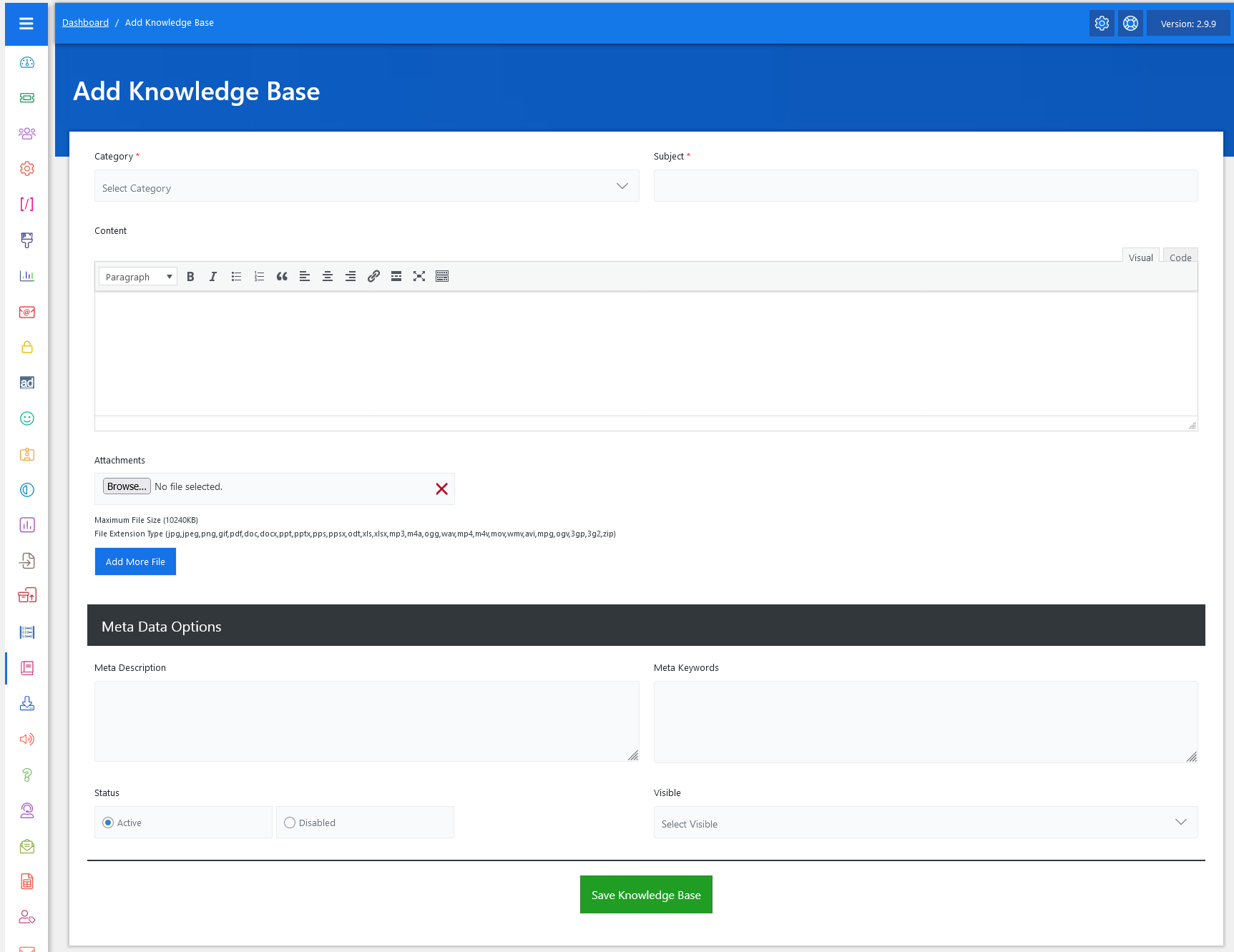
Now, let’s walk through the step-by-step process of adding a knowledge base from the admin end. From your admin dashboard, navigate to the Admin Dashboard > Dashboard Menu > Add Knowledge Base to start adding a knowledge base effectively. On the ‘Add Knowledge Base’ form, we will provide all the necessary details for adding a knowledge base.
Adding a new knowledge base is simple. Just click the “Add Knowledge Base” button. You’ll be prompted to enter the Category, Subject, Detailed Content (via a rich-text editor), Attachments, Status, and Visible. This allows you to manage content in a structured way. For example, under a Technical Support category, you might add an article like “How to Reset Your Account Password,” complete with step-by-step instructions and screenshots.
- Category: Select category from the drop-down menu. Categories help group similar topics together for easy navigation.
- Subject: Enter the subject of the knowledge base.
- Content: The content section is a rich-text editor where you can write detailed information, instructions, or guides. You can use formatting tools like headings, bold, bullet points, and hyperlinks to enhance readability.
- Attachments: You can also upload attachments using the file upload section. This is useful for including manuals, templates, brochures, or supporting documents. The system allows multiple attachments up to 10MB each, and it supports a wide range of file formats.
- Mata Data Options: Under the Meta Data Options section, you have fields to enter a Meta Description and Meta Keywords. These are valuable for SEO (Search Engine Optimization) and internal search performance. A well-written meta description summarizes the article, while keywords help users find the article using relevant search terms.
- Status: The Status setting lets you choose whether the article is Active or Disabled.
- Visible: The Visible dropdown lets you define who can view the article. This can be particularly useful if certain content is meant only for logged-in users/visitors or logged-in users only.
Visible to “Logged-in user / Visitor.”
When you choose “Logged-in user / Visitor”, the knowledge base article is made publicly accessible. This means:
-
Anyone can view the article, whether they are logged into your system or just visiting your site.
- This setting is useful when you want to maximize accessibility and provide open support to all users, including potential customers or guests browsing your platform.
Visible to “Logged-in user only.”
Selecting “Logged-in user only” restricts access to the article so that only authenticated users (users who are logged into the system) can view it. This is useful when the content is: Sensitive or intended for registered clients.
-
This setting helps you ensure that unauthorized users do not gain access.
After filling in all the relevant fields, simply click the green “Save Knowledge Base” button at the bottom of the form. The system will validate the inputs and create the new knowledge base. If any required information is missing or incorrect, a notification will alert you to fix it before submission.